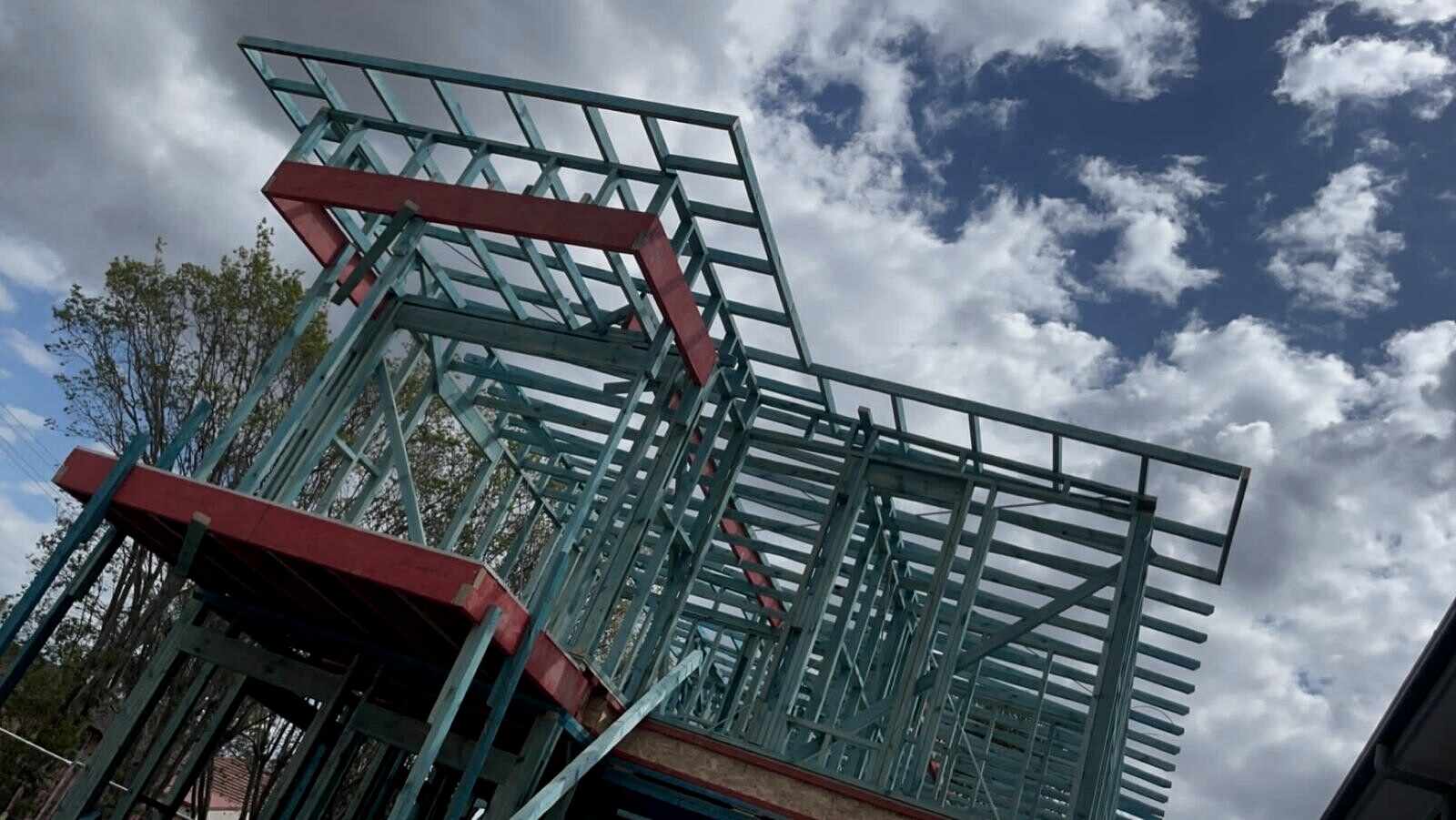
External cladding Sydney
External cladding installed by the crew that built the frame
Fibre cement and timber weatherboards, panels and lightweight cladding systems fixed over wrap, battens and flashings. Straight courses, dry walls, one crew for the whole external skin.
Cladding is the finish everyone sees and the frame nobody sees. The two are the same job. If the studs are not plumb, the weatherboards wave. If the wrap and flashings are not right, water gets behind the boards and stays there. Zakariya Woodworks installs external cladding across Sydney on the frames we build, which is the simplest way to make sure the wall behind the boards is right.
We install fibre cement weatherboards and panels, timber weatherboards and other lightweight cladding systems that fix to a timber frame. Each product goes on to the manufacturer's instructions, with the wall wrap, battens or cavity system it calls for, and the flashings around windows, doors and junctions that keep the wall dry.
Scope
Cladding systems we install
- 01
Fibre cement weatherboards
Lapped fibre cement boards set out in even courses, fixed to the studs at the specified spacing, with joints staggered and cut ends sealed to the product's instructions.
- 02
Fibre cement panels
Large-format fibre cement panels over battens or a cavity system, with expressed or flush joints as the plans show.
- 03
Timber weatherboards
Traditional timber boards on extensions and renovations where the new work has to match the old house, or across the whole build.
- 04
Wrap, battens and cavity
Breathable wall wrap, vertical battens or cavity closers where the system requires ventilation and drainage behind the cladding.
- 05
Flashings and junctions
Head, sill and jamb flashings at windows and doors, and the junctions with eaves, fascia and blueboard sections, so water has somewhere to go.
- 06
Strip and re-clad
On existing homes, old cladding removed, the frame and wrap underneath checked and repaired, and the new product fixed.
Why us
Why cladding belongs with the framing carpenter
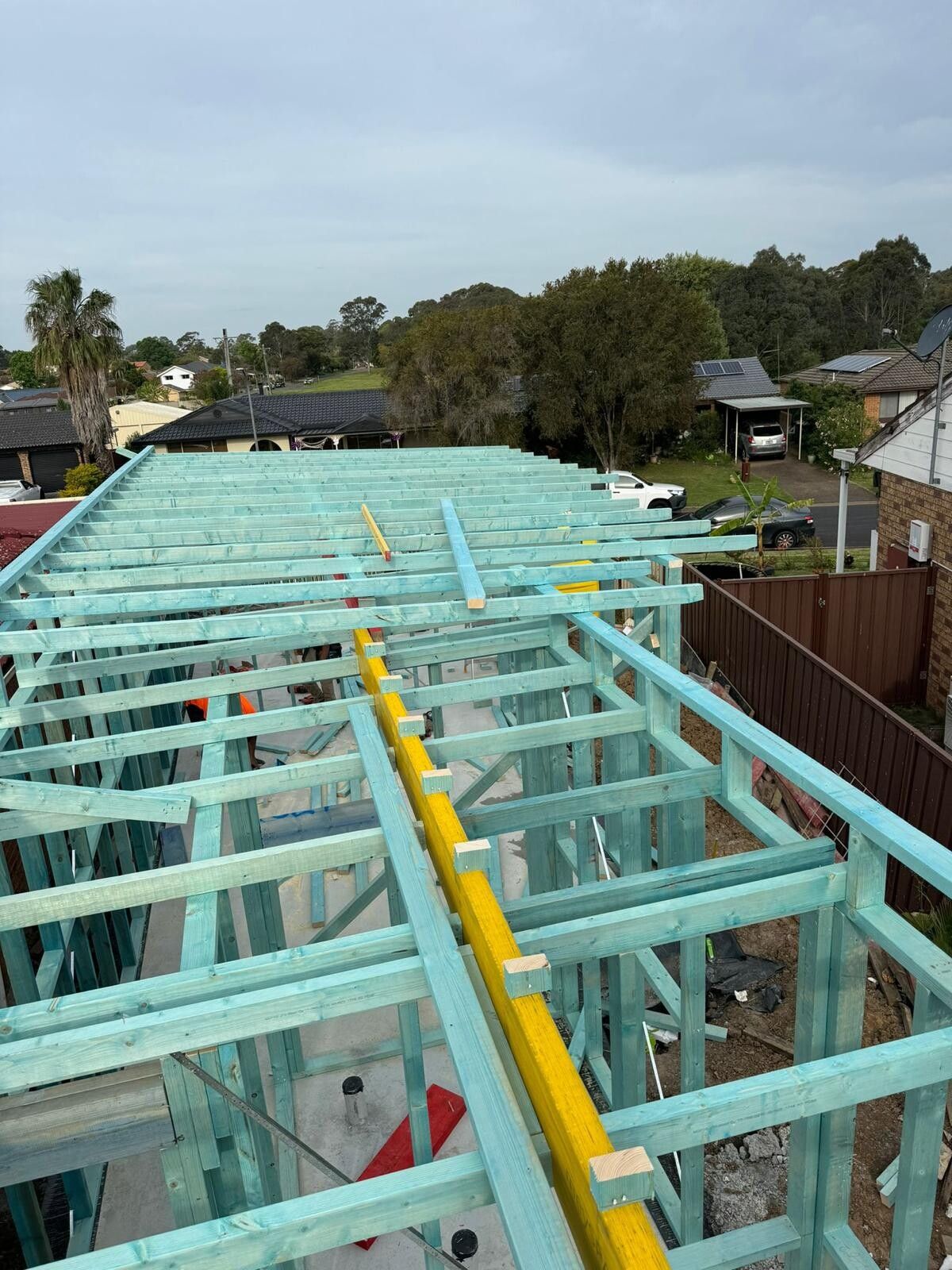
A cladding job is a set-out job. Courses have to be even from the bottom plate to the eave line, and they have to line through at every corner and every window. That starts with knowing where the top plate is and where the frame is straight, which is easier when you built it. It also means the flashings and the wrap are treated as part of the structure, not as an afterthought.
Builders who use us for the frame often add cladding, eaves and fascia to the same scope. One crew stays on site from the first stud to the last board, one quote covers the external carpentry, and there is no handover between trades where the flashings get missed.
- Courses set out to line through at corners and openings
- Wrap, battens, cavity and flashings installed to the product's instructions
- New cladding matched to the existing house on extensions
- Quoted alone, or with the frame, eaves and fascia as one external carpentry scope
How it runs
How a cladding job runs
-
Step 1
Product and elevations
Send the elevations showing the cladding product and the areas it covers, the window and door schedule, and any batten or cavity detail. Photos help if it is an existing house.
-
Step 2
Wrap, battens, flashings
Wall wrap and flashings go on first, then battens or cavity closers where the system needs them. The frame is checked for line before the first board.
-
Step 3
Set out and fix
Course heights set out from the bottom to the eave line, boards or panels fixed at the specified spacing, cut ends sealed and joints staggered.
-
Step 4
Junctions and trims
Corner trims, junctions with eaves and blueboard, and stops at openings finished so the painter or renderer has a clean edge.
Watch-outs
Problems good cladding installation avoids
Weatherboard courses that wave along the wall or do not line through at corners
Water behind the cladding because flashings or wrap were missed
Cladding fixed hard to the frame where the product needed a cavity
Obvious joins between old and new boards on an extension
Questions
Cladding installation: common questions
Straight answers to what builders and homeowners ask before they book.
01What types of cladding do you install?
Fibre cement weatherboards and panels, timber weatherboards, and other lightweight cladding systems that fix to a timber frame. We install to the manufacturer's instructions, with the wall wrap, battens or cavity system the product calls for. Tell us the product on your plans and we will quote it.
02Why use a framing carpenter for cladding?
Cladding is only as straight as the frame behind it. Because we build the frame, we know it is plumb and the studs are where the cladding needs them. We also handle the battens, the flashings around windows and doors, and the junctions with eaves and fascia, so the whole external skin is done by one crew.
03Do you install cladding on extensions and existing homes?
Yes. On extensions we match the new cladding to the existing house or install a new finish across both, as the plans require. On existing homes we can strip old cladding, check the frame and wall wrap underneath, and fix the new product. Photos of the existing walls help us quote.
04Can cladding be part of a frame-to-lock-up package?
Yes. Many builders prefer one crew for the frame, blueboard or cladding, and eaves and fascia. It means fewer trades to schedule and the external carpentry stays consistent from the first stud to the last board. We quote the full external carpentry scope from your plans.
05What do you need to quote cladding?
Plans or elevations showing the cladding product and the areas it covers, the window and door schedule, and details of any battens or cavity system. Photos help if it is an existing home. We quote from your plans, and we can arrange a site visit or meeting within a week.
Get a quote
Send your elevations for a cladding quote
Email the plans and the cladding product to noman@zakariyawoodworks.com.au or call 0430 546 824. We can look at an existing house within a week.
Quote: cladding installation
Tell us what you are building and where. Attach the plans if you have them, or email them to us separately after you send the form.